Barkerville Mill Village
In 1832, John and Charles Barker purchased the original 1804 mill of Daniel Stearns. Two years later, brother Otis joined the firm which was then named John V. Barker and Brothers.
In 1842, the Western Railroad, later the Boston and Albany Railroad, built a depot near the junction of future Cloverdale St. and West Housatonic St. The depot served the mills and the nearby Hancock Shaker Village. This was a great benefit as it allowed their products to move faster and in greater quantities to the markets in the cities.
West Pittsfield Shaker Village Depot on Cloverdale St.
By the 1850’s the Barkerville Mill was producing more woolen products than any other Pittsfield. In 1870 The Barker family owned over 1,200 acres of land throughout Berkshire County and had expanded the main mill to a new three story brick building. The Barker Brothers income in 1865 was a total of $90,000, the equivalent today of $1.7 million.
The Barkerville neighborhood grew to include dozens of employee homes, the Barkerville and West Pittsfield Schools, the Chapel of St. Stephens, the West Pittsfield Railroad depot, several stores, a sawmill and three identical Italianate villas for the brothers on Cloverdale St.
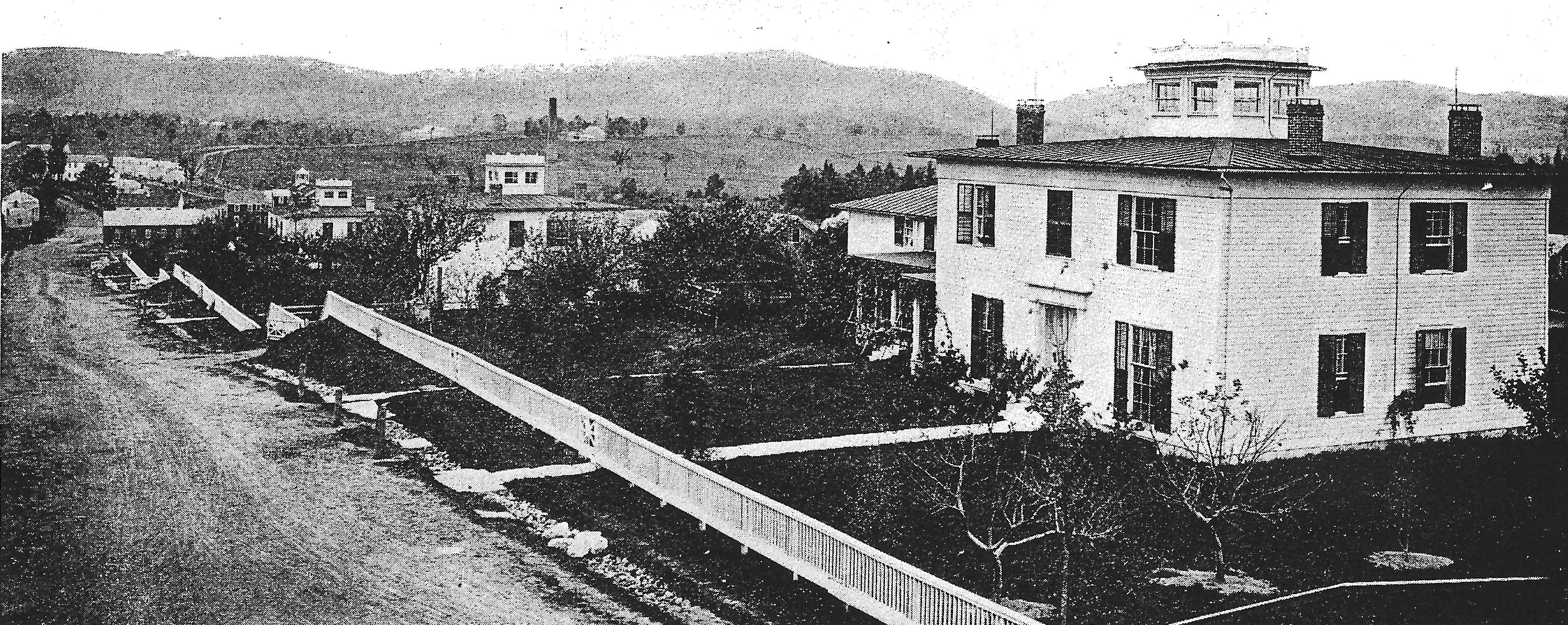
Three Villas of Barker Brothers. Mill is in Background of Middle House
Unfortunately, disaster was to strike. On January, 1879, a huge fire broke in Lower Barkerville at the Railroad Woolen Mill on Hungerford St. The building was completely destroyed and the loss also forced the other Lower Barkerville mill to close.
The closing of the two mills and national economic problems led to the eventual bankruptcy of the Barker family. By 1890 the Barkerville mill was closed and many of the homes in the area were abandoned.
Several attempts were made to reopen the mill but all failed. Finally, in 1924, the United States Bureau of Entomology of the Department of Agriculture leased the building to serve as the regional headquarters of an effort to head off the spread of Gypsy Moths that were devastating forests in the Northeast. However in 1931 the Entomology building was closed and the program relocated.
Despite several attempts to reopen the mill, all failed. Finally In 1942 the building was taken down and bricks, timbers and planking were sold to the public.
After almost 150 years, the era of mills in Barkerville had ended.
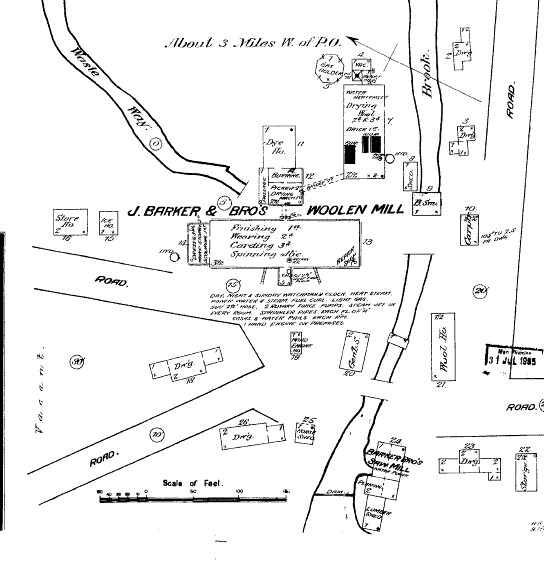
 The Mills of Pittsfield